
German logistics sector seeks to expand in defence, but calls for certainty
Logistics service providers are willing to expand their role in the German defence sector, but complex tendering processes and insufficient...
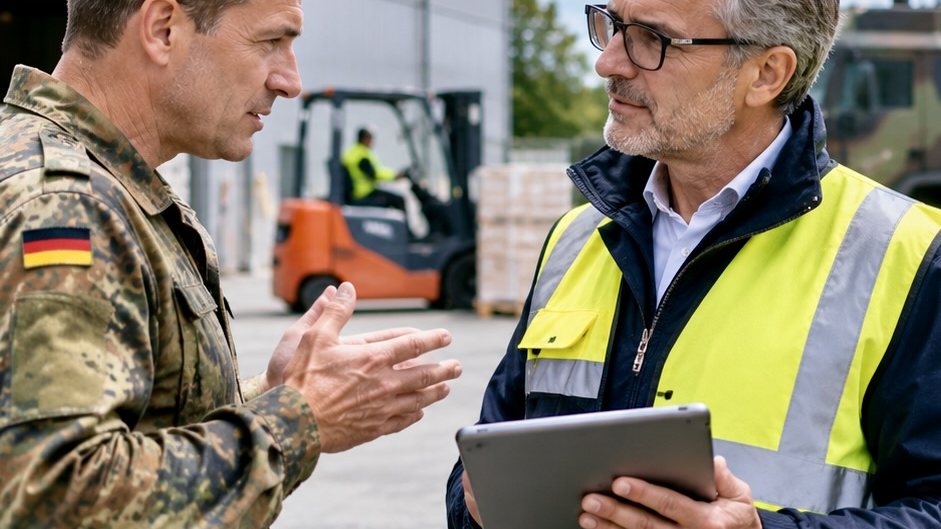
Logistics service providers are willing to expand their role in the German defence sector, but complex tendering processes and insufficient planning certainty are hindering this expansion. This is according to a survey by Strategy& and the Bundesvereinigung Logistik (BVL) of 85 transport and logistics companies. The Bundeswehr’s own logistics capacity is insufficient to meet its growing defence tasks. The researchers conclude that reliable cooperation with commercial partners is therefore a prerequisite for the defence of Germany and its allies.
Germany must be able both to deploy its own armed forces and to receive, supply and transit allied units. Cooperation with civilian logistics companies has existed for decades, but must be scaled up considerably to meet these requirements. This calls for greater reserves, redundancy and the ability to sustain deliveries over the long term under difficult conditions. According to the researchers, the key challenge is transforming existing commercial services into a reliable system that continues to function even during crises.
Of the companies surveyed, 59 per cent are already active in the defence sector. Within this group, 24 per cent work exclusively for the defence industry, 34 per cent solely for public sector clients and 42 per cent for both client groups. Involvement is therefore broad, but still limited in economic terms: when asked about their current defence turnover, around two-thirds of respondents stated that this accounts for no more than 5 per cent of their annual turnover.
This story was originally published by Supply Chain Movement. Read the full story at Supply Chain Movement →

Conversation