
Research targets greater accuracy in WTIV positioning
A new study suggests that an alternative approach to dynamic positioning control could improve the accuracy of offshore wind turbine installation vessels in challenging conditions. Researchers examined how dynamic positioning systems can better compensate…
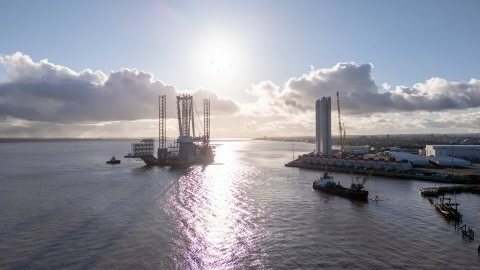
A new study suggests that an alternative approach to dynamic positioning control could improve the accuracy of offshore wind turbine installation vessels in challenging conditions. Researchers examined how dynamic positioning systems can better compensate for environmental forces, sensor noise and uncertainty in vessel behaviour, while accounting for limits on thruster output and adjustment rates.
The study, published in the journal Scientific Reports, focuses on maintaining a vessel’s position as foundation piles are inserted into and extracted from the seabed, when the forces acting on a vessel can change.
In computer simulations, the proposed control strategy achieved settling times of 56 seconds during pile insertion and 66 seconds during extraction. Two alternative methods took 78 and 85 seconds, respectively, during insertion, and 93 and 105 seconds during extraction.
The authors also reported smaller positioning errors once the vessel had stabilised, including in a scenario where part of the disturbance-observation system was impaired.
This story was originally published by Project Cargo Journal. Read the full story at Project Cargo Journal →



Conversation