Hapag-Lloyd advances in 1.2 million TEU terminal and reinforces Espírito Santo as an alternative to Santos
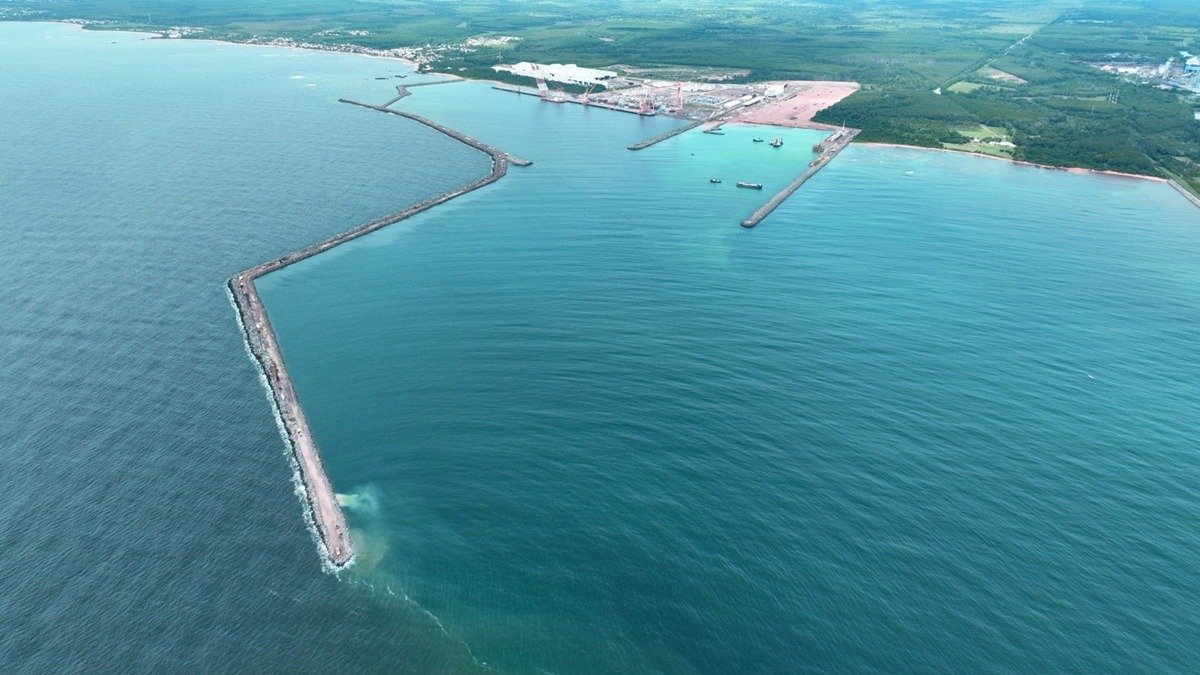
View of Imetame Logística Porto: construction work on the breakwater is nearing completion – Photo: Imetame
The German shipping giant Lloyd’s table advanced in its logistics expansion strategy in Brazil by completing the acquisition of a 50% stake in the project to build a new container terminal in Aracruz, Espírito Santo. The project will be developed in partnership with Grupo Imetame through the joint venture Hanseatic Global Terminals Aracruz SA
Scheduled to begin operations in mid-2028, the terminal is designed to handle up to 1.2 million TEUs per year, making it one of the most important port facilities under development in the country. The structure will have 750 meters of quay, a draft of 17 meters and state-of-the-art equipment designed to handle containers.
Super Rectangle (728×90) – Position 17
The new facility arrives at a time of growing demand for port capacity in Brazil. The increase in exports, imports and the movement of containerized cargo has put pressure on the main ports in the Southeast, especially the Port of Santosleading operators and shipowners to seek new logistical alternatives.
Located on the north coast of Espírito Santo, the Aracruz terminal will have a strategic role both for import and export operations and for cargo transshipment activities, functioning as a logistics hub integrated with the main international maritime routes.
The expectation is that the project will significantly increase Espírito Santo’s competitiveness in the national port scenario. The state has been attracting investments in logistics infrastructure, benefiting from its proximity to important road and rail corridors that connect the region to consumer and producer markets in the Southeast, Center-West and Minas Gerais.
Experts estimate that the new terminal could contribute to the deconcentration of operations currently directed to large ports in the Southeast region, offering new options for exporters, importers, logistics operators and cargo agents.
In addition to the regional impact, the investment reflects a global trend towards verticalization of large shipping companies. In recent years, shipowners have increasingly invested in port terminals, distribution centers and logistics assets to increase control over their transport chains.
Through its port division, Hanseatic Global Terminals (HGT), Hapag-Lloyd follows a strategy similar to that adopted by groups such as MSC, Maersk e CMA CGMwhich has been expanding its presence in infrastructure assets around the world.
For the Brazilian market, the entry of a terminal with a capacity of 1.2 million TEUs represents not only an increase in operational supply, but also the possibility of attracting new maritime services, greater competition between operators and efficiency gains for the entire logistics chain.
When completed, the Aracruz terminal should join the group of largest port projects aimed at moving containers under development in the country, consolidating Espírito Santo as one of the main logistics hubs for Brazilian foreign trade.