New shipowner race expands maritime capacity and puts pressure on Brazilian port infrastructure
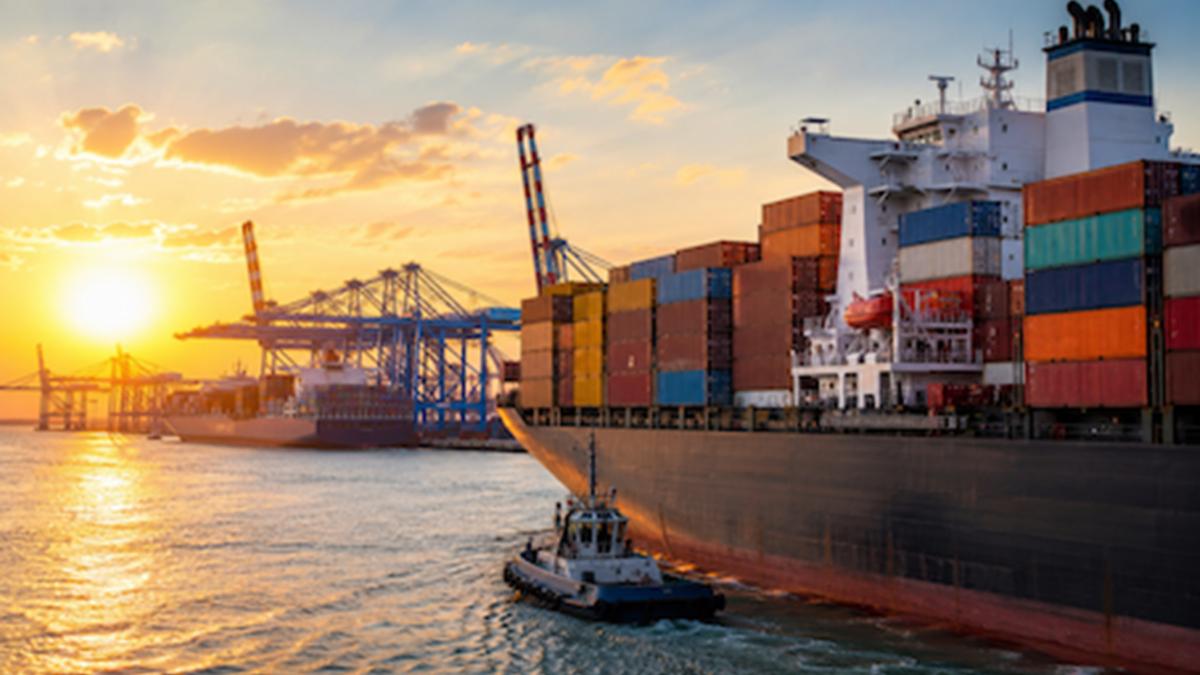
Image for illustration purposes only
Latin America has consolidated its position as one of the most strategic markets for international container shipping. According to a survey by consultancy Alphaliner, the region received an additional 349,300 TEUs of maritime capacity between May 2025 and May 2026, registering the third largest expansion in the world in the period.
The growth occurs amid the expansion of the global container fleet, which increased 5.7% in the last 12 months and reached 33.9 million TEUs. In total, 1.84 million TEUs were added to global capacity, reflecting the shipowners’ focus on markets considered more promising for expanding trade flows.
Super Rectangle (728×90) – Position 17
Although the largest portion of investments was directed to the route between the Far East and Europe, which received an additional 667.4 thousand TEUs, Latin America stood out with a 7.8% expansion in the supply of space for containerized cargo.
North-South routes gain prominence
The study shows a gradual change in the strategy of shipping companies. While some traditional routes between major economic centers show limited growth, North-South flows are gaining importance within the global reorganization of navigation.
For shipowners, emerging markets offer greater growth potential given the expansion of consumption, agribusiness and industrialization. In this context, Latin America appears as one of the most attractive regions for new services and capacity expansion.
Brazil boosts demand
The increase in space supply follows the evolution of Brazilian foreign trade. THE Port of Santosthe main port complex in Latin America, handled more than 1.4 million TEUs in the first quarter of 2026, recording the best performance in history for the period.
In March alone, approximately 485 thousand TEUs were handled, a result driven by the growth in exports and imports, especially in flows with Asia, Brazil’s main trading partner.
In addition to agricultural and mineral commodities, the increase in imports of machinery, equipment and industrial components has also contributed to sustaining the demand for regular maritime transport.
Growth exposes logistical bottlenecks
If, on the one hand, expanding capacity represents an opportunity for foreign trade, on the other hand, it highlights historical structural challenges facing Brazilian ports.
Port operators, shipowners and experts have been warning of the need to expand investments in terminals, land access and backport areas. At the Port of Santos, for example, several segments of the sector assess that terminal occupancy is already approaching the limits considered ideal to absorb the growth projected for the coming years.
Concern increases as increasingly larger vessels begin operating on the east coast of South America, requiring greater productivity, depth of access channels and efficiency in cargo movement.
Global reorganization favors the region
The redistribution of global capacity also reflects the impacts of geopolitical tensions. The security crisis in the Red Sea continues to cause vessel diversions around the Cape of Good Hope, increasing travel times and requiring more ships to maintain regular services between Asia and Europe.
This scenario has been encouraging shipowners to diversify markets and strengthen operations in regions with growth potential, such as Latin America and Africa.
For sector analysts, the tendency is for the region to continue attracting investments in maritime capacity in the coming years, driven by the expansion of agribusiness, e-commerce, industry and growing integration with Asian markets.
The challenge, however, will be to ensure that investments in infrastructure keep pace with demand growth, preventing operational bottlenecks from compromising the logistical competitiveness of Brazilian ports.