Maersk and Hapag-Lloyd remain cautious about returning to the Strait of Hormuz
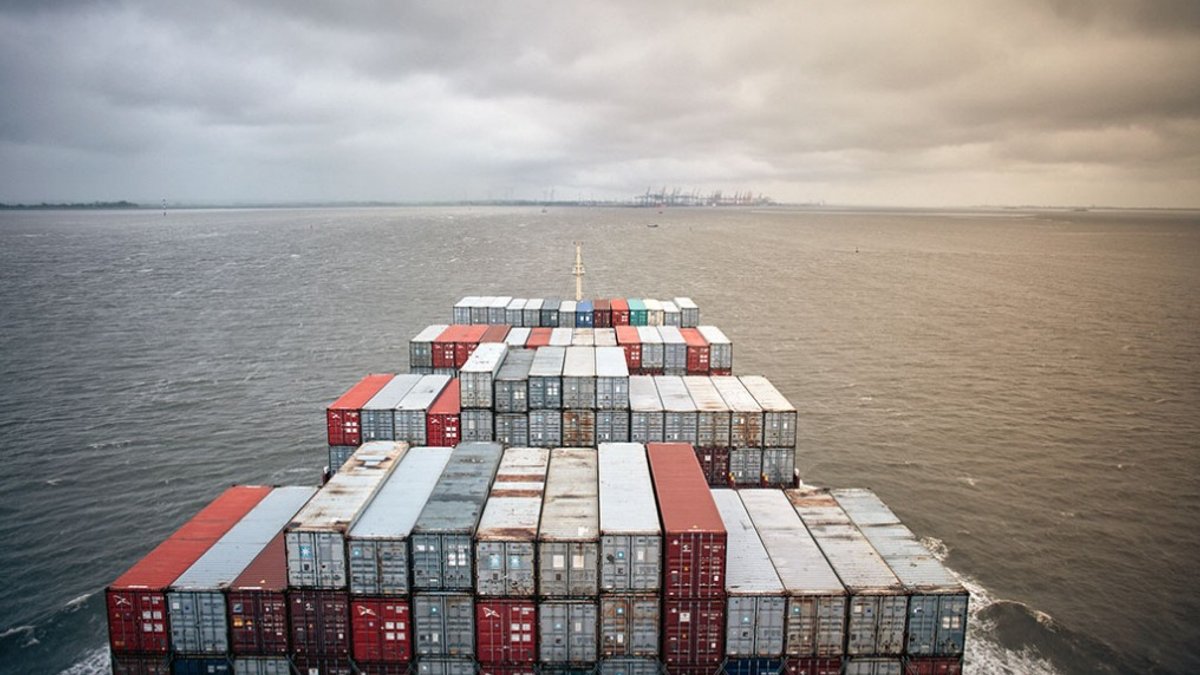
Photo for illustrative purposes only
The shipping companies Maersk and Hapag-Lloyd reacted cautiously to the announcement of the two-week ceasefire between the United States and Iran and the reopening of the Strait of Hormuz, announced last Tuesday (7) by the President of the United States, Donald Trump, and confirmed by the Iranian government.
Super Rectangle (728×90) – Position 17
Maersk claimed that there were not yet sufficient guarantees for the resumption of normal operations, while Hapag-Lloyd projected a gradual recovery, subject to security developments in the region.
Maersk said the ceasefire may open up some opportunities for ship transit through the Strait of Hormuz, but does not yet provide enough safety certainty to resume normal operations. “For now, we are taking a cautious approach and will not make any changes to specific services,” the shipping company explained in a statement.
According to the note, the ceasefire may create transit opportunities, but it still does not offer complete maritime security, and the company needs to understand all possible associated conditions. According to the company, any decision to transit the Strait of Hormuz will be based on ongoing risk assessments, rigorous monitoring of the security situation and available guidance from competent authorities and partners.
The shipping company used a “land bridge” system through ports including Jeddah in Saudi Arabia, Salalah and Sohar in Oman, and Khor Fakkan in the United Arab Emirates to channel cargo and then transport it overland to destinations in the Gulf region.
“We will continue to closely monitor developments and provide updates as more information emerges in the coming hours and days,” concluded the statement from Maersk, which suspended cargo bookings for several Gulf ports last month and introduced emergency fuel surcharges worldwide to offset rising costs.
Hapag-Lloyd, for its part, expressed cautious optimism about the possibility of resuming navigation through the Strait of Hormuz after the ceasefire, although it warned that normalizing traffic across its network would take at least six to eight weeks.
During an online meeting with customers, the shipping company’s CEO Rolf Habben Jansen reiterated cautious comments, noting that further security guarantees are still needed. “Although a ceasefire was agreed overnight, it is fair to say that the conflict in the Middle East continues to seriously affect shipping and supply chains,” he said, adding that the situation is “very unstable.”
He also mentioned the possibility of accepting reservations from customers, as long as the ceasefire continues in the coming days. “We will likely open bookings for the Upper Gulf region, initially for select markets, but we expect this to happen relatively soon,” Jansen said.
The executive estimated that the additional costs arising from the crisis in the Middle East reach between 50 million dollars and 60 million dollars per week and warned that the shipping company will have to pass on part of these costs to its customers, in addition to the 40 million to 50 million dollars previously estimated.
Jansen reported that nearly a thousand ships remain stuck in the region, six of which belong to his company, with a combined capacity of approximately 25,000 standard containers.