Porto Itapoá expands connections and strengthens routes to Europe and Manaus
Disclosure
Porto Itapoá continues to expand its strategic presence in national and international maritime trade with the arrival of two new navigation services that promise to further strengthen the competitiveness of the Santa Catarina terminal.
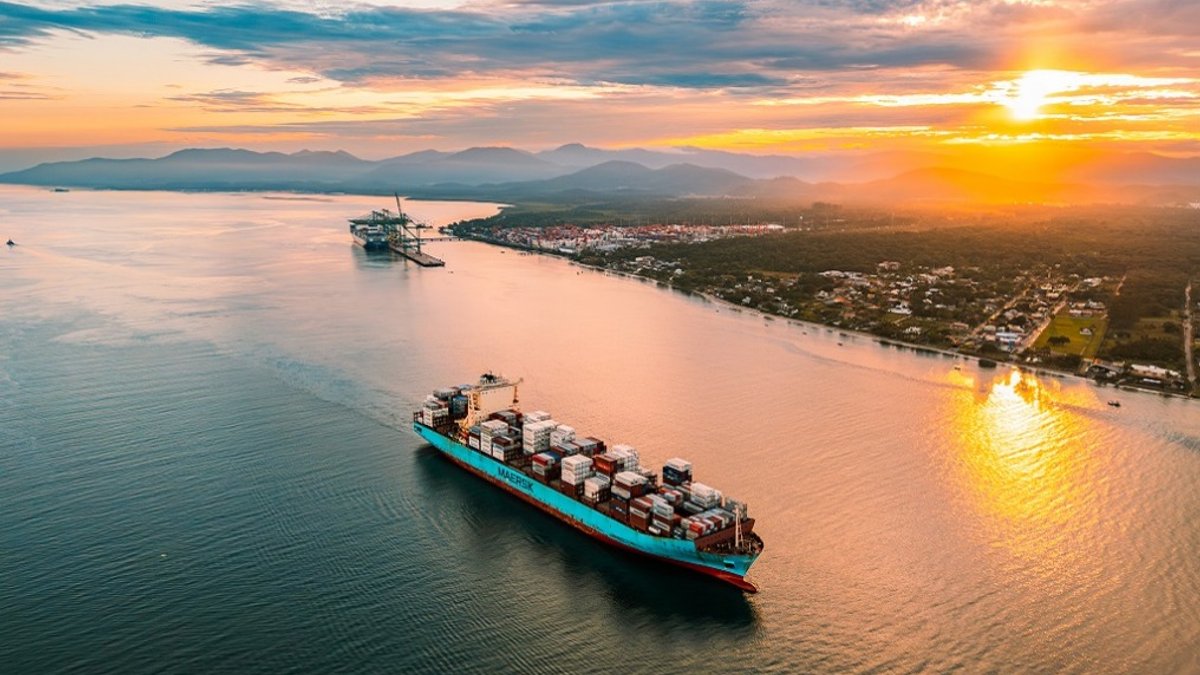
The main novelty in the long-haul segment is the inclusion of the port in the Neosamba service rotation, operated by Maersk. The new line will directly connect Santa Catarina to the main logistics hubs in Northern Europe, expanding alternatives for importers and exporters in the region.
Super Rectangle (728×90) – Position 17
The route includes important international ports, including Southampton, in the United Kingdom; Rotterdam, in the Netherlands; Hamburg and Bremerhaven, in Germany; Antwerp, Belgium; Tangier, Morocco; in addition to Santos, Paranaguá, Buenos Aires, Montevideo and Itapoá.
The new connection comes at a time of strong commercial relations between Porto Itapoá and the European Union. In 2025, around 19% of all imported cargo handled by the terminal originated in the European bloc, equivalent to approximately 285 thousand TEUs. Among the highlighted segments are food and beverages, chemical products and industrial machinery.
In exports, the European Union accounted for approximately 12% of cargo shipped through the terminal, totaling around 180 thousand TEUs. Forest products, household appliances, electronics, machinery and steel cargo are among the main items destined for the European market.
According to the CEO of Porto Itapoá, Ricardo Arten, the expansion of international connectivity reinforces the terminal’s strategic position.
“Santa Catarina has an industrial base highly connected to the European market, and Porto Itapoá is strategically positioned to meet this demand with logistical efficiency, proximity to production centers and increasingly robust maritime services”, highlighted the executive.
In the domestic market, the terminal also expands its operations with the arrival of the ALCT1 service, from Aliança Navegação e Logística, scheduled to begin operations in June. The new cabotage route will connect Itapoá to Manaus with an estimated maritime transit time of approximately 13 days.
The service will have two weekly stops at the terminal and will mainly serve industrial cargo, electronics, consumer goods and refrigerated products transported between the South and North regions of the country.
The novelty complements the existing offer of the BRACO service, operated by Mercosul Line and CMA CGM, further strengthening national logistics integration.
Cabotage numbers demonstrate the growing relevance of this mode. In 2025, Porto Itapoá handled approximately 298 thousand TEUs in this segment, registering growth of 32% compared to the previous year. The performance consolidated the terminal as a leader in cabotage movement between ports in southern Brazil.
For Ricardo Arten, the advancement of cabotage reflects a change in market behavior in search of more efficient and competitive solutions.
“Cabotage has been gaining ground because it combines handling capacity, operational predictability and logistical competitiveness. The growth recorded at Porto Itapoá shows that the market is seeking increasingly efficient solutions for cargo transportation in Brazil”, he stated.
With the expansion of international and domestic connections, Porto Itapoá reinforces its role as one of the country’s main logistics hubs, contributing to the development of Brazilian foreign trade and the strengthening of national production chains.