Wilson Sons advances in innovation with the use of drones in offshore logistics
Disclosure
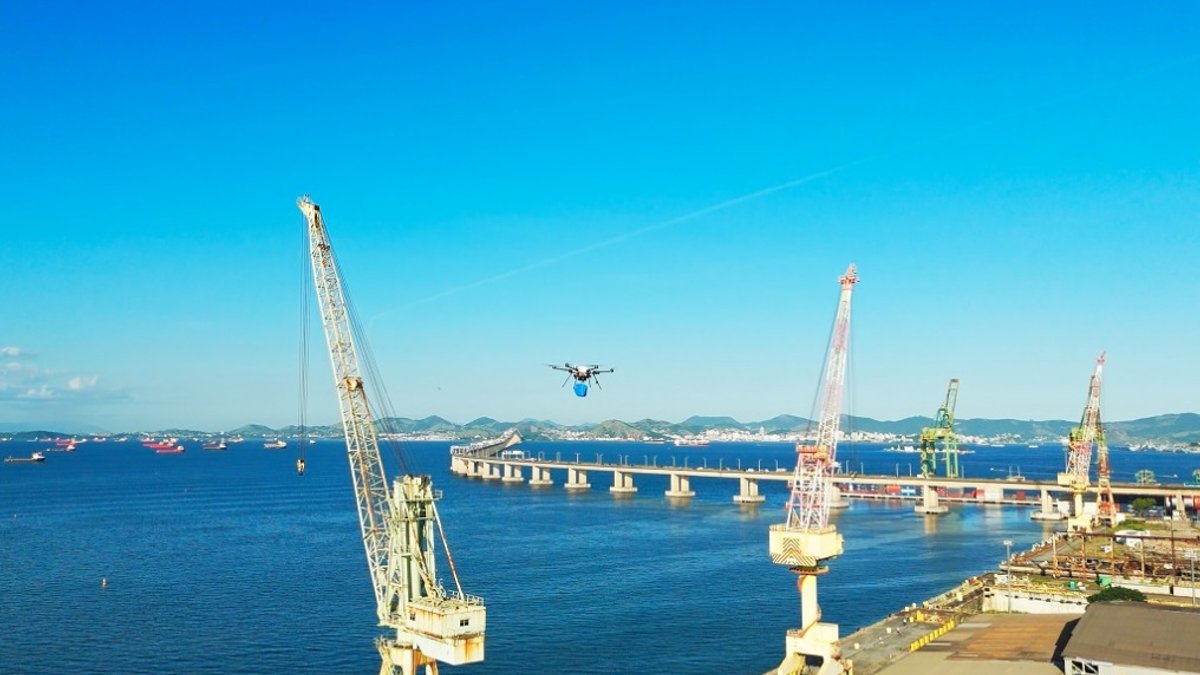
A Wilson Sons announced, this Wednesday (29), the beginning of a new stage of testing with drones for document delivery and collection intended for support vessels for oil and gas platforms in Guanabara Bayin Rio de Janeiro. The initiative represents an important technological advance for maritime and offshore logistics in Brazil.
Super Rectangle (728×90) – Position 17
According to the company, testing began last April 6 and are conducted through their Maritime Agencywith support from the offshore support base located in Rio. The project continues the experience started last year in Port of Salvador (BA)where the company carried out similar operations in a port environment.
The drones used belong to Speedbird Aeroa company specialized in unmanned aerial logistics, with more than thousand flights carried out in the offshore sector in Singaporea global reference in this type of operation. In Brazil, the tests received all necessary authorizations from National Civil Aviation Agency (Anac) and the Airspace Control Department (Decea).
Wilson Sons informed that the vehicles will be used to transport light objects, with a capacity of up to five kilosmainly documents and small materials. The estimated average time between the base and the vessels is up to nine minutescovering an aerial distance of approximately eight kilometers.
In the sector’s assessment, the innovation represents a significant operational leap, as it reduces the need for displacement by auxiliary vessels for simple tasks, which contributes to lower operational risk, greater speed and reduction of indirect costs.
According to Rodrigo Lopesoperations manager at the company’s maritime agency, the use of drones “is a milestone in the port and logistics sector”, as it makes operations safer and more efficient, in addition to contributing to the decarbonization of the offshore energy industry.
The general manager of offshore support bases, Edwardo Valverdehighlighted that the initiative points to a trend towards modernization of the energy segment in the country, aligned with sustainability and energy reduction goals. greenhouse gas (GHG) emissions.
For the maritime and port sector, the project signals a digital transformation movement that is increasingly present in Brazilian operations, especially in strategic areas such as support for pre-saltoffshore platforms and highly complex logistics services.