
High speed HS2: low-speed freight at Euston
Rail freight is being used to remove up to 170,000 tonnes of excavated material from Britain’s HS2 high-speed rail project construction site at Euston, avoiding…
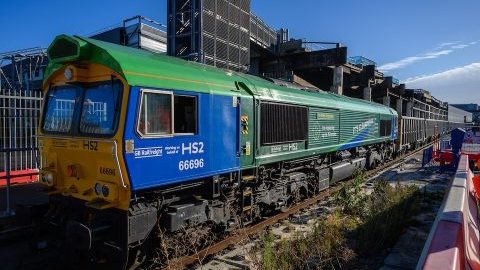
Rail freight is being used to remove up to 170,000 tonnes of excavated material from Britain’s HS2 high-speed rail project construction site at Euston, avoiding more than 10,000 heavy goods vehicle (HGV) journeys around London. The operation, using GB Railfreight trains, is supporting preparations for the new HS2 station, where bulk excavation has begun to create space for the future platforms.
Rail Minister Lord Hendy visited the site on Monday this week (16 November) to see the operation, alongside Camden Council leader James Slater. The programme uses a new loading facility beside disused Track 17 at Euston station, with excavated material transported by rail to Bedfordshire for reuse. It is designed to accommodate freight trains alongside the station’s continuing passenger services.
HS2’s station construction partner, the Mace Dragados joint venture (MDJV), has started bulk excavation across the station site. The work involves removing material to a depth of approximately seven metres, where the new HS2 platforms will be constructed.
Up to 170,000 tonnes of excavated material is expected to leave the site by rail. The trains carry the material to Forders Sidings in Bedfordshire, where it will be reused in the Stewartby Brickworks development. This is a somewhat more planned reuse of materials than in the past. In the 1960s redevelopment, masonry from the Victorian station was dumped in disused docks in the east of London, including the famous “Euston Arch”, once a London landmark.
This story was originally published by RailFreight.com. Read the full story at RailFreight.com →

Conversation