
Study puts a price on moving Burns Harbor steel by inland waterways
Shifting steel shipments from Burns Harbor in Indiana to the inland waterways could cut transport costs by between USD20.7 and USD34.4 per short ton, according to a study commissioned by the American Great Lakes…
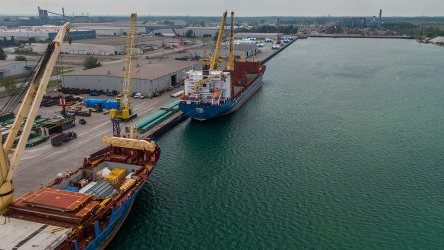
Shifting steel shipments from Burns Harbor in Indiana to the inland waterways could cut transport costs by between USD20.7 and USD34.4 per short ton, according to a study commissioned by the American Great Lakes Ports Association (AGLPA). The Great Freight Connection, conducted by consultancy CPCS Transcom, assesses four trade lanes linking the Great Lakes with the Illinois Waterway and Mississippi River. AGLPA commissioned it with the Great Lakes St. Lawrence Seaway Development Corporation, Ports of Indiana, the Illinois International Port District (IIPD) and Port Milwaukee.
Steel is the only general cargo lane in the study, and the one with the largest savings. Around 90 percent of the coils, slabs and finished steel leaving ports of Indiana–Burns Harbor currently move by truck, according to stakeholders consulted for the study.
The all-water route runs by tug and barge through the T.J. O’Brien Lock and down the Illinois Waterway. For deliveries to Peoria, Illinois, the study estimates trucking costs of USD21.6 to USD29.3 per short ton over 182 miles (293 km), against USD4.1 to USD5.5 by water over 202 miles (325 km). For St. Louis, Missouri, the gap widens to around USD34.4 per short ton.
Diverting 100,000 tons (90,700 tonnes) a year would remove around 5,100 truck trips. Steel coils and slabs often exceed standard truck payload limits, the study notes, and the waterway avoids highway weight restrictions.
This story was originally published by Project Cargo Journal. Read the full story at Project Cargo Journal →

Conversation