Casa Civil opens Tecon Santos 10 auction for MSC and Maersk
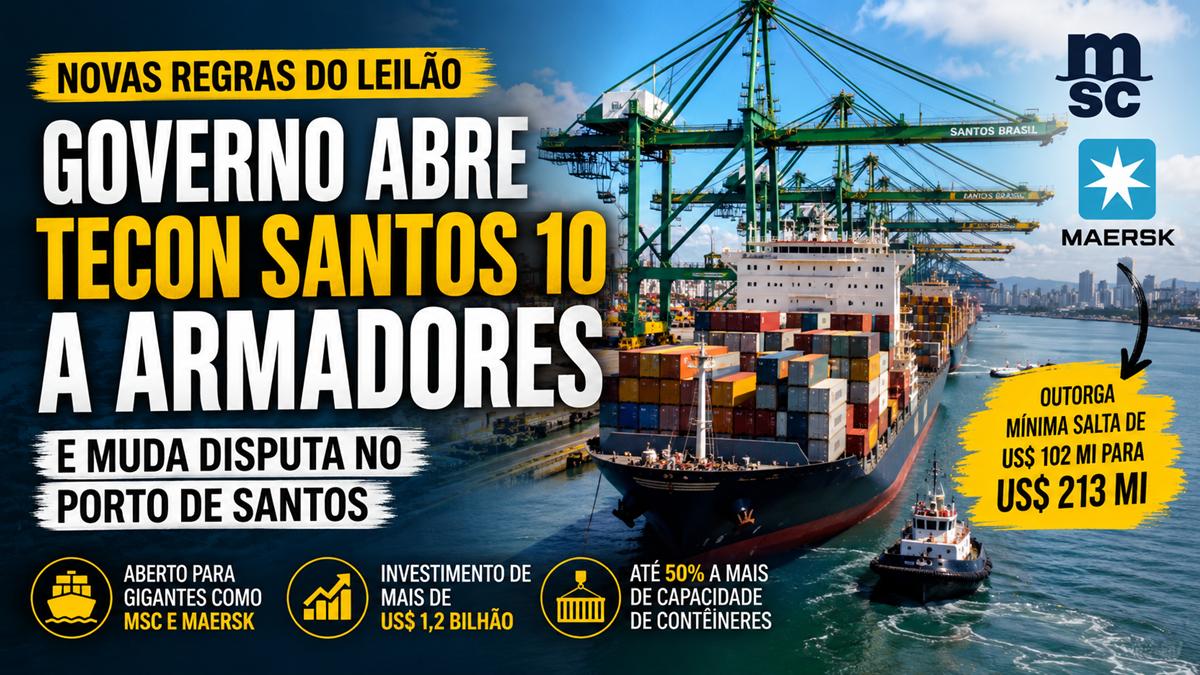
Image generated by artificial intelligence
The federal government decided to reformulate the concession model for the future Tecon Santos 10 container terminal, in a measure that promises to change the competitive scenario of the Port of Santos and increase the interest of global shipping giants in the project considered strategic for Brazilian logistics.
The main change involves the release of shipowners’ participation in the bidding, including companies already operating in the Santos complex, such as MSC ea Maersk. Furthermore, the Civil House determined to increase the minimum value of the concession grant, which went from approximately US$102 million to approximately US$213 million.
Super Rectangle (728×90) – Position 17
The changes were formalized through a technical note from the Investment Partnership Program (PPI), sent to the Ministry of Ports and Airports, responsible for submitting the changes to the ANTAQthe body that conducts the bidding process.
Tecon Santos 10 is considered one of the largest port projects on the current federal agenda and foresees investments in excess of US$1.2 billion. The expectation is that the new terminal will increase the container handling capacity in the region by around 50%. Port of Santosconsidered the largest port complex in Latin America.
The expansion comes amid increased operational pressure on Santos. In 2025, the port handled approximately 5.4 million TEUs, maintaining regional leadership in containerized cargo. The growth in demand, however, intensified concerns related to logistics infrastructure, mainly in road access, railway integration and backport areas.
Responsible for around 30% of Brazilian trade, the Port of Santos concentrates strategic operations for agribusiness, industrial exports and imports with high added value.
The government’s new position modifies the understanding that had been supported by ANTAQ and previously supported by Union Court of Auditors. The initial proposal restricted the participation of shipowners and operators already installed in Santos under the argument of preserving competition in the port complex.
The TCU’s main fear was related to the advancement of verticalization of operations, a model in which shipowners also start to control port terminals. In the court’s assessment, this could generate market concentration and favor certain commercial routes or specific customers.
The new guidance from the Civil House, however, adopts a different understanding. According to the PPI technical document, not enough competitive elements were identified to prevent the participation of shipping companies in the dispute. The text also states that ANTAQ itself found no regulatory impediments to the presence of shipowners at the event.
Under the new model, groups already installed in the Port of Santos will be able to compete for Tecon Santos 10 as long as they present an irrevocable commitment to sell shares in other terminals in the complex before signing the new concession contract.
The change brings Brazil closer to a trend observed in large international logistics hubs, where shipowners have been increasing their participation in port assets to ensure operational predictability and greater control over global logistics chains.
After the bottlenecks recorded during the Covid-19 pandemic, groups such as MSC, Maersk, CMA CGM e COSCO accelerated investments in port infrastructure and logistics integration around the world.
The debate over Tecon Santos 10 also highlights differences between independent operators and large global groups. Companies like ICTSI e JBS they defended a model divided into stages, in which operators already present in Santos could only participate in a second round of the auction, if no initial interested parties emerged.
The federal government, however, started to defend that broader competition can increase the attractiveness of the auction, increase private investments and stimulate gains in logistical efficiency for Brazilian exporters and importers.
In addition to the expansion of the pier, the project will require additional investments in land access, railway connections and logistical support areas, considered essential to avoid new operational bottlenecks around the port of Santos.
Initially scheduled to take place by the end of 2025, the bidding ended up being postponed due to disagreements between the government, regulatory bodies and private operators over the terminal’s competitive model. According to the PPI technical document, the most likely scenario points to the auction being held in the second half of 2026, although there is still the possibility of postponement to 2027.
The outcome of the concession should directly influence the future expansion of the Port of Santos and could define the competitive model of Brazilian port logistics for the coming decades.
Rectangle Indoor Banner (600×250) – Position 1