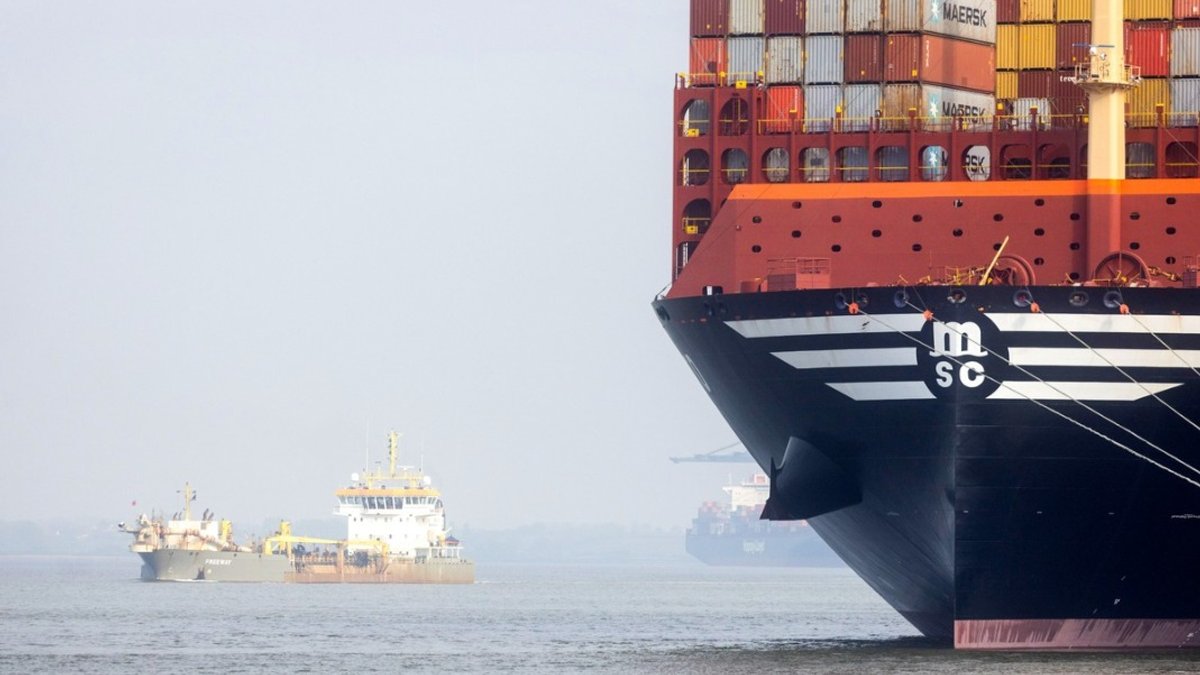
MSC container ship is intercepted by Iran on strategic world trade route
Disclosure
Iran released this Wednesday (22) images that, according to the Tehran government, show the seizure of two commercial ships in the Strait of Hormuz, one of the world’s main maritime routes for the transport of oil, gas and containerized cargo.
Super Rectangle (728×90) – Position 17
The video, attributed to Iran’s Revolutionary Guard and broadcast by Iranian state TV, shows armed soldiers approaching the container ships MSC Francesca and Epaminondas.
In the images, speedboats with Iranian flags approach the vessels, while soldiers climb aboard carrying rifles and carry out an internal sweep of the ships.
According to Iranian authorities, the vessels were seized for alleged links with Israel, operation without the required authorizations and, also, for alleged tampering with navigation systems. The accusations, however, are still under international investigation.
Maritime tracking data confirmed that both ships were approximately 15 kilometers off the Iranian coast at the time of the approach. Maritime intelligence information also indicates that a third ship, flying the Liberian flag, would have been the target of fire in the same region, further increasing the climate of instability in the maritime corridor.
The seizure of the MSC Francesca, which was sailing under the Panamanian flag, was confirmed by Montenegro’s Minister of Maritime Affairs, Filip Radulović, who reported the presence of four Montenegrin sailors on board.
According to the minister, the entire crew remains safe and diplomatic negotiations are underway.
This Thursday (23), the head of the Iranian Judiciary, Mohseni Ejei, classified the operation as a “show of strength” by the country’s Armed Forces, stating that the action represents a source of national pride.
The episode increases the concern of the international maritime sector, especially as it occurs in the Strait of Hormuz, a passage historically responsible for around 20% of the global flow of oil and oil products.
The tension in the area is already causing repercussions on the international energy market and global logistics chains, with increased freight costs and pressure on oil prices.