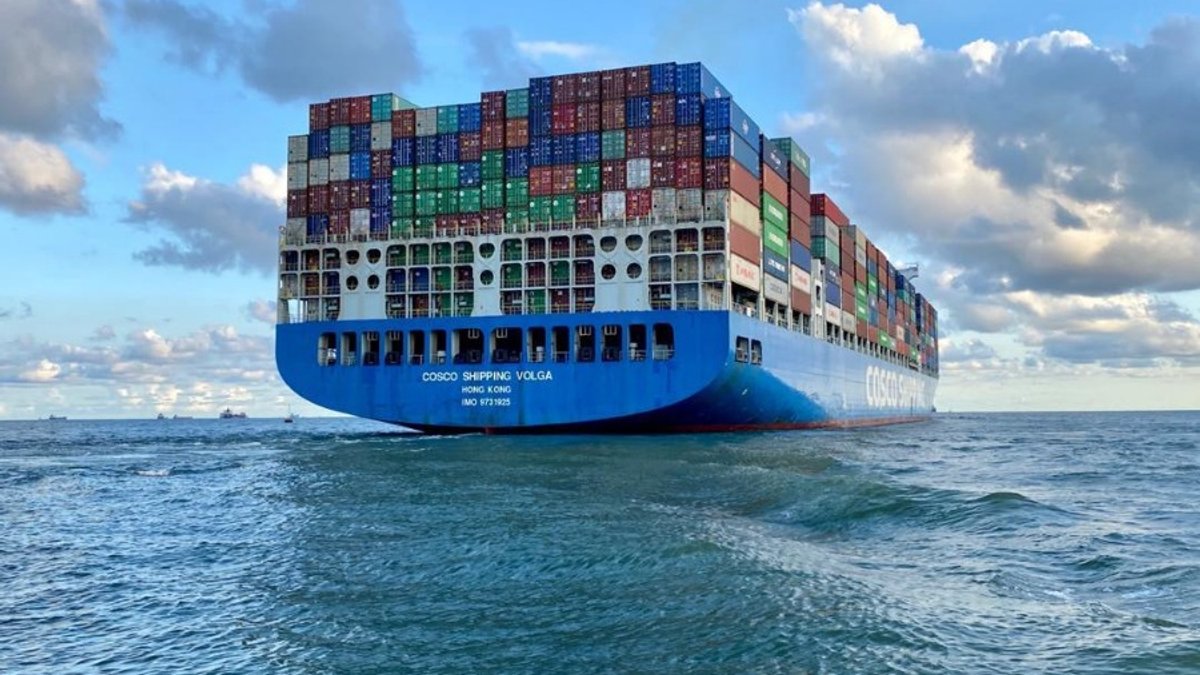
MSC, Maersk, CMA CGM and COSCO already control almost 60% of the world’s maritime capacity
Photo for illustrative purposes only
International shipping of containers is increasingly concentrated in the hands of a small group of companies. Data released by specialized consultancy Alphaliner reveals that the world’s four largest shipping companies already control 58.7% of the global container fleet capacity, consolidating a trend that has been intensifying over the last decade.
Leading the ranking is MSCwhich surpassed the mark of 7.3 million TEUs of capacity and now alone holds 21.6% of the world fleet. The Swiss company significantly expanded its advantage over second place, Maerskresponsible for 13.8% of global capacity.
Super Rectangle (728×90) – Position 17
Completing the group of giants is CMA CGM ea COSCO Shipping Lines. Together, the four companies account for practically three-fifths of all global capacity for regular container transport.
The survey also points out that the ten largest shipowners on the planet currently account for more than 84% of available global capacity, leaving an increasingly smaller share of the market for medium and small operators.
Consolidation transforms the sector
The current scenario is the result of a long consolidation process marked by mergers, acquisitions, operational alliances and billion-dollar investments in large ships.
About ten years ago, the four largest shipowners concentrated approximately half of the world’s capacity. Today, this share is close to 60%, highlighting the growing influence of a small number of companies on global logistics.
The MSC leadership is one of the main examples of this movement. After surpassing Maersk in operational capacity, the company continued to expand its fleet through the acquisition of used vessels and the incorporation of new ships.
Currently, the difference between MSC and Maersk exceeds 2.6 million TEUs, a volume greater than the combined capacity of several shipowners that rank between eighth and tenth in the global ranking.
Impacts for Brazil
Market concentration has direct consequences for Brazilian foreign trade. The main companies in the ranking operate regularly in national ports, including Port of Santos, Port of Paranaguá, Porto Itapoá, Port of Navegantes, Port of Rio Grande, Port of Salvador e Port of Pecém.
These companies transport a significant portion of Brazilian exports of proteins, cellulose, coffee, cotton, chemical products and industrialized cargo, in addition to supplying a large part of imports of manufactured goods and production inputs.
With fewer operators dominating the market, decisions related to the supply of shipping space, frequency of calls, availability of containers and commercial strategies begin to have an even greater impact on exporters and importers.
Asia increases its role
The ranking also highlights the strengthening of Asian shipowners. Among the ten largest groups in the world, five are headquartered in Asia, including COSCO, Ocean Network Expressa Evergreen Marinea HMM ea Yang Ming Marine Transport.
The growing presence of these companies accompanies the expansion of Asian production chains and the strengthening of trade routes linking Asia to Latin America, a market that has received significant investments in maritime capacity in recent years.
More ships, greater competition
Despite increasing concentration, global capacity continues to increase. The global container fleet already exceeds 34 million TEUs and is expected to continue growing with the delivery of new mega-containers currently under construction.
For experts, the sector’s main challenge will be balancing the growth in supply with the evolution of global demand. If fleet expansion advances at a faster pace than international trade, shipowners may face greater competitive pressure and reduced freight levels on certain routes.
Meanwhile, consolidation continues to redefine global logistics. For Brazilian companies that depend on maritime transport, decisions made by an increasingly smaller group of shipowners tend to directly influence logistical costs, space availability and competitiveness in international trade.