MSC Expansion Redefines Global Container Shipping Landscape
Disclosure
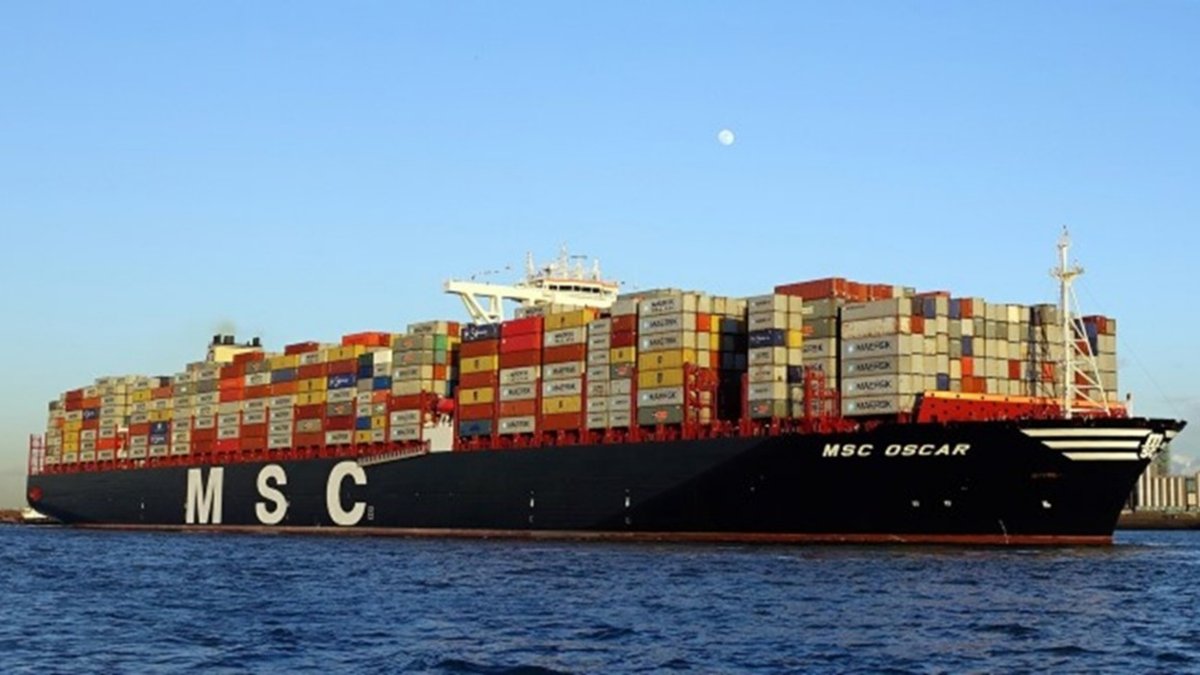
Mediterranean Shipping Company (MSC) has achieved a historic milestone in the global maritime industry by reaching approximately 20% of global container shipping capacity. With a fleet of more than 6 million TEUs, the company consolidated its position as the largest container ship owner on the planet and significantly expanded the gap in relation to its main competitors.
Data released by specialized consultancy Alphaliner shows that MSC has maintained global leadership in the segment since 2022. At the end of 2025, the company already operated an advantage of close to 2.5 million TEUs over second place, Maersk, consolidating one of the biggest differences ever recorded between the main global operators.
Super Rectangle (728×90) – Position 17
The company’s accelerated growth was mainly driven by the acquisition of new ships and the continuous expansion of the fleet. In 2025 alone, MSC accounted for around 39% of all capacity added by the 12 largest containerized shipping companies in the world, incorporating more than 830 thousand TEUs into their operations.
Surveys by the United Nations Conference on Trade and Development indicate that MSC’s participation in the global fleet has practically doubled in the last two decades. In 2006, the company concentrated around 9% of global capacity. In 2024, this percentage was already approaching 19%, now reaching the historic mark of 20%.
The shipowner’s advance occurs in a scenario of strong concentration of international maritime transport. Currently, few business groups and global alliances control more than 80% of the world’s container shipping capacity. Among them are the Ocean Alliance, THE Alliance and Gemini Cooperation, an operational partnership formed by MSC and Maersk after the reformulation of sector alliances.
Impacts for Brazil
MSC’s growing leadership has direct consequences for Brazilian ports and national foreign trade. The company operates regular services that connect important Brazilian terminals, such as the Port of Santos, the Port of Paranaguá and ports in Arco Norte, to the main consumer markets in Europe, Asia and North America.
Experts estimate that increased concentration could increase the influence of large shipping companies over the supply of space on ships, the definition of calls and global commercial strategies. For Brazilian exporters of agricultural commodities, industrialized products and higher value-added cargo, the fleet and network decisions adopted by MSC now have an even more relevant impact on international logistics.
At the same time, MSC’s aggressive expansion strategy contrasts with the more conservative stance adopted by competitors such as Maersk, which has prioritized operational efficiency and logistics integration over rapidly expanding its fleet. This movement should continue to influence the competitive dynamics of the sector in the coming years.